How Construction Machinery Seals Impact Reliability and Maintenance
In the construction machinery industry, components like excavators, loaders, bulldozers, and concrete pumps rely heavily on seals to maintain system integrity. While seals may seem minor, they play a crucial role in ensuring hydraulic systems and drivetrains operate smoothly, directly affecting maintenance costs and downtime. For distributors and wholesalers, understanding how to select the right construction machinery seals is essential to provide professional solutions and minimize post-sale issues.
1. Understanding Equipment Conditions and Operating Environment
Construction equipment often works in demanding and variable environments, including mud, dust, water, and fluctuating temperatures. Each operating condition imposes specific requirements on seal materials and design:
Hydraulic systems: Cylinders, pumps, and motors require seals that are oil-resistant, pressure-resistant, and wear-resistant. Common materials include NBR (nitrile rubber) and FKM (fluorocarbon rubber). NBR works well with standard oils and moderate temperatures, while FKM suits high temperatures or chemically aggressive environments.
Shaft seals: Rotating shafts and drive ends require seals to prevent lubricant leakage and block dust and water. Metal-reinforced oil seals or double-lip designs are common in these applications.
Extreme conditions: For high-temperature, high-pressure, or particulate-heavy environments, advanced materials like PTFE or composite seals are preferable for enhanced durability.
For distributors, knowing the specific operating environment is the first step toward recommending the right product.
2. Material Selection and Performance Considerations
The material of a seal directly affects its service life and reliability. In construction equipment, several factors must be considered:
Oil and chemical compatibility: Hydraulic oil, lubricants, fuel, and other industrial fluids can impact seal integrity. Selecting materials compatible with the working fluid is critical.
Temperature resistance: Equipment operating continuously can reach temperatures above 100°C. High-temperature materials such as FKM or PTFE help maintain performance.
Wear and fatigue resistance: Repetitive motion or high-speed rotation requires seals that resist wear and fatigue to avoid early failure.
Dust and contamination protection: In dusty environments, seals with dust lips or multiple sealing lips help prevent contamination and maintain system performance.
Material selection influences not only equipment reliability but also maintenance cycles and replacement intervals.
3. Structural Design and Installation Considerations
Seal design should match the motion type and installation location:
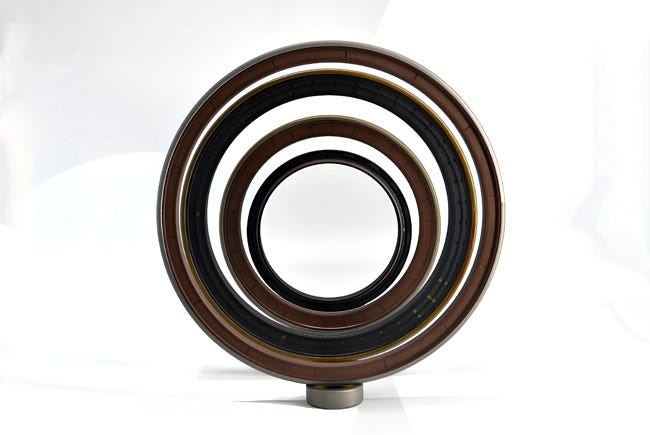
Rotating shafts: Use reinforced oil seals or TC/TB/TG type designs. High-speed rotation requires attention to lip friction and shaft fit.
Reciprocating motion: Hydraulic cylinders or piston rods often use rod seals or combination seals to ensure reliable sealing under varying pressures.
Static sealing: Components like housings or covers can use O-rings or gaskets.
Installation details significantly affect seal longevity:
Shaft surface finish: Smooth surfaces free of scratches or burrs reduce lip wear.
Proper lubrication: Apply a thin layer of lubricant on the seal lip and shaft before installation to minimize friction.
Correct orientation: Dust lips should face outward to prevent contamination.
Avoid over-compression: Press seals evenly without excessive force to prevent distortion or premature failure.
4. Distributor and Wholesaler Focus
For distributors and wholesalers, selecting the right seals goes beyond technical specifications. Supply chain reliability and inventory management are equally important:
Batch consistency: Ensuring consistent material, hardness, and dimensions across production batches reduces customer issues.
Stock coverage: Maintaining inventory of standard and special sizes allows rapid response to urgent orders.
Customization capabilities: Providing material, dimension, or design customization for special projects enhances competitiveness.
Technical support: Guiding clients on proper installation and maintenance reduces downtime and builds trust.
A well-managed supply chain and strong technical support increase both customer satisfaction and long-term business relationships.
5. Key Takeaways
Selecting seals for construction equipment requires a systematic approach:
Understand the application environment and operating conditions.
Choose materials suited to the fluid type and temperature.
Match the seal structure to the type of motion.
Focus on installation details and proper maintenance.
Consider supply chain reliability and service capability for distributors and wholesalers.
Although small in size, seals play a vital role in equipment reliability. Choosing the right seal and ensuring correct installation not only improves machine efficiency but also reinforces the professional value offered by distributors and service providers in the construction machinery industry


Comments
Post a Comment