Why Pneumatic Seals Matter in Automated Manufacturing
In many automated manufacturing environments, pneumatic seals are often overlooked. They do not draw as much attention as sensors, valves, or controllers. Yet, after years of working with assembly lines, packaging equipment, and automated handling systems, I have learned that the performance of these “small parts” often decides whether a production line runs smoothly.
This article shares practical insights on why pneumatic seals are essential in industrial automation, how materials should be selected, what installation mistakes to avoid, and what distributors and wholesalers should pay attention to when supporting their customers.
1. Why Pneumatic Seals Play a Critical Role in Automated Systems
In pneumatic systems, seals determine air tightness, motion stability, and energy efficiency. Regardless of how advanced the valve or controller is, a worn seal can make the entire system lose efficiency.
There are three main reasons why pneumatic seals are so important:
1. Motion precision and stability
Cylinders in automated equipment often operate millions of cycles. When the seal loses elasticity or wears, the cylinder may show signs of leakage, vibration, or slowing down.
2. Energy efficiency
Air leakage increases the load on the compressor, resulting in higher energy consumption. Over time, the additional energy cost often exceeds the cost of replacing seals.
3. Production reliability
A faulty seal can stop a machine, which then halts production. For automated systems, stability is more valuable than any specification on paper.
2. Where Pneumatic Seals Are Most Commonly Used
Pneumatic seals appear across various industries:
Food packaging machinery — requiring clean, low-friction materials.
Electronics assembly lines — requiring long service life under high-frequency motion.
Automotive component handling — dusty environments increase wear.
Logistics sorting systems — long operation hours with stable cycle requirements.
Printing and light-industrial machines — requiring consistent motion accuracy.
All of these applications share one characteristic: repetitive, continuous operation where downtime is costly.
3. Choosing the Right Material: Matching Instead of Overengineering
Different pneumatic applications require different materials. The goal is not to choose the most expensive option but the one that matches the real working condition.
NBR (Nitrile Rubber)
Suitable for standard pneumatic cylinders.
Good oil resistance, cost-effective.
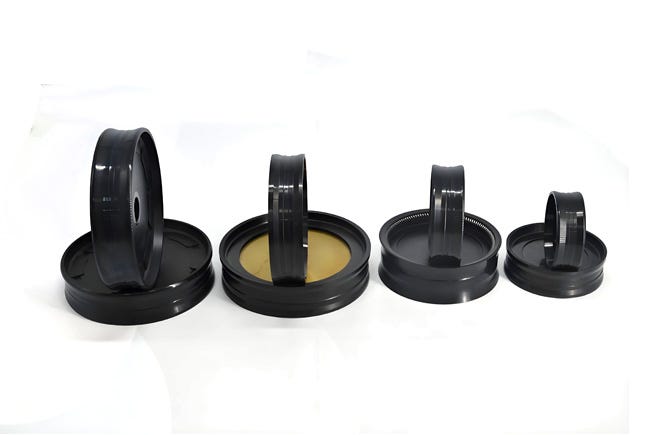
PU (Polyurethane)
Widely used in pneumatic seals.
High strength, wear resistance, good elasticity.
FKM (Fluorocarbon Rubber)
Suitable for high-temperature or chemical environments.
PTFE (Polytetrafluoroethylene)
Low friction, suitable for high-speed cylinders.
Material selection should consider motion speed, temperature, and the type of gas used.
4. Installation Details That Often Lead to Seal Failures
Even well-designed seals fail prematurely when installation is done incorrectly. Common issues include:
Scratching the sealing lip during installation.
Lack of lubrication, causing early abrasion.
Dust or metal debris inside the cylinder.
Misalignment leading to uneven wear.
A small oversight in installation may lead to unexpected downtime.
5. Practical Advice for Distributors and Wholesalers
1. Gather complete application details
Ask customers about:
Motion frequency
Operating environment
Temperature range
Whether high-speed operation is needed
Cleanliness requirements
More information means fewer after-sales issues.
2. Maintain inventory for common sizes and materials
PU and NBR should form the majority of stock, with limited FKM and PTFE options for special conditions.
3. Provide simple installation guidelines
Even a basic reminder helps reduce failures caused by improper installation.
4. Pay attention to batch consistency
Dimensional differences between batches can affect assembly quality in high-volume manufacturing.
Pneumatic seals are small components, yet they influence the rhythm and reliability of entire production systems. Understanding seal materials, installation precautions, and different application conditions helps manufacturers, distributors, and wholesalers provide dependable solutions and build lasting customer trust.


Comments
Post a Comment