How to Distinguish Good and Poor Quality Skeleton Oil Seals?
In mechanical sealing systems, the skeleton oil seal is one of the most critical components. Its quality directly affects the stability and service life of the equipment. To determine whether an oil seal is reliable, evaluation should focus on appearance and performance.
Appearance Inspection Standards
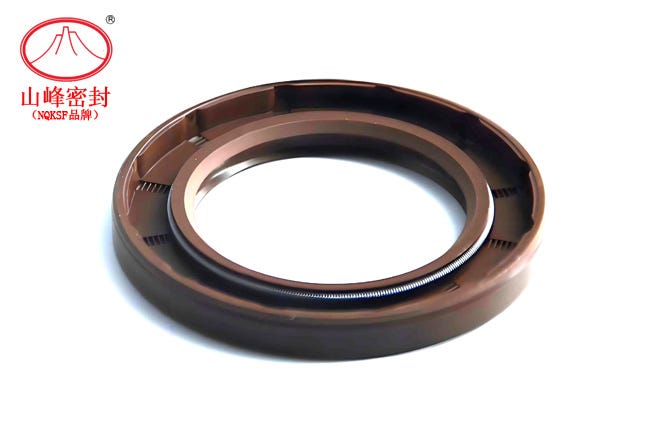
Surface Quality: The rubber surface of a high-quality oil seal should be smooth and even, free from burrs, cracks, bubbles, or embedded impurities. The color must be uniform, the metal frame rust-free, and the sealing lip (edge) sharp and consistent without notches — otherwise leakage may occur.
Dimensional Accuracy: Using a vernier caliper, the tolerance for inner and outer diameters is generally controlled within ±0.1 mm. The lip interference fit should be 0.1–0.3 mm. The oil seal face should clearly mark the dimensions (shaft diameter × outer diameter × height), manufacturer name, and trademark.
Structural Integrity: Rubber must bond tightly with the reinforcement ring, without looseness or misalignment. The inner and outer surfaces should not expose metal. For oil seals with springs, the spring must be rust-free, undeformed, and firmly seated in its groove.
Performance Testing Standards
Oil Resistance: According to national standards (e.g., GB/T9877.1–2008), immerse the oil seal in transmission oil №25 at 70 ± 5 °C for 24 hours. The weight change should remain within −3% to +5%. In a gasoline/benzene mixture (75% gasoline №120 + 25% benzene) at 20 ± 5 °C for 24 hours, the weight change should not exceed +20%.
High-Temperature Resistance: A premium oil seal should maintain sealing properties under both high and low temperatures without aging, hardening, or softening. Typical test conditions include hot air aging at 120 °C for 70 hours, with hardness change ≤ +10, tensile strength reduction ≤ 15%, and elongation reduction ≤ 40%.
Sealing Performance: Installation tests should confirm that the oil seal prevents leakage during shaft rotation and blocks external contaminants. Verification is usually conducted under specified pressure and temperature conditions.
Physical Properties: Professional instruments are used to measure hardness (tolerance ±5 Shore A), tensile strength, compressive strength, and friction/aging resistance. These indicators reflect the overall reliability of the material.
Recommendations from Shanfeng (NQKSF)
In factories or maintenance sites, visual and dimensional checks should be supplemented with an Incoming Quality Control (IQC) process:
Develop inspection checklists to record and evaluate appearance defects.
Conduct random laboratory performance tests on samples.
Establish supplier evaluation mechanisms to ensure stable raw materials and manufacturing processes.
This approach not only helps quickly identify defective products but also ensures long-term equipment stability.
Evaluating the quality of skeleton oil seals is straightforward: appearance must be defect-free, and performance must meet standards. By applying these inspection methods during procurement and usage, companies can effectively avoid inferior products and improve equipment reliability.


Comments
Post a Comment