How to Interpret Skeleton Oil Seal Specifications and Select the Proper Size for Your Shaft and Bore?
The model designation and selection of skeleton oil seals are often perceived as complex, but the logic behind them is straightforward. Most manufacturers follow GB/T 9877, ISO 6194, and widely accepted industry conventions.
A typical model format is:
Type — (Inner Diameter × Outer Diameter × Width) — Material
This structure allows users to quickly understand the seal’s design, dimensions, and material properties.
Common Structural Types
(Applicable to major brands such as Shanfeng (NQKSF), CFW, SKF, etc.)
Meaning of Letter Codes
TC Type: Double‑lip design with a primary oil‑retaining lip and a secondary dust lip. Suitable for general machinery.
TB Type: Enhanced dust‑exclusion capability. Ideal for construction machinery and dusty environments.
TA Type: High‑pressure design for hydraulic systems and other high‑pressure applications.
SC Type: Single‑lip rubber‑covered seal for clean or low‑contamination environments.
SB Type: Single‑lip seal with a metal outer case, offering high dimensional accuracy and stable press‑fit installation.
TCV Type: Double‑lip design with reinforced dust protection for dusty, muddy, or outdoor conditions.
TCN Type: Low‑friction double‑lip design suitable for high‑speed and low‑energy‑consumption applications.
Meaning of Numbers
The numerical portion of the model indicates the seal’s key dimensions:
70 × 90 × 10
70 mm: Inner diameter (shaft size)
90 mm: Outer diameter (housing bore)
10 mm: Width (seal thickness)
These three parameters determine whether the seal fits the shaft and housing correctly.
Selecting the Correct Seal Based on Shaft and Housing Dimensions
Choosing the right seal starts with accurate measurement, followed by matching the material and structure to the operating environment.
Accurate Measurement
Use calipers or other precision tools to measure:
Shaft diameter (d): The seal’s inner diameter should be slightly smaller than the shaft to ensure proper interference and sealing.
Housing bore diameter (D): The outer diameter of the seal should match the housing bore, typically with slight interference.
Housing depth (H): Select a seal width that fits the available installation space and meets sealing requirements.
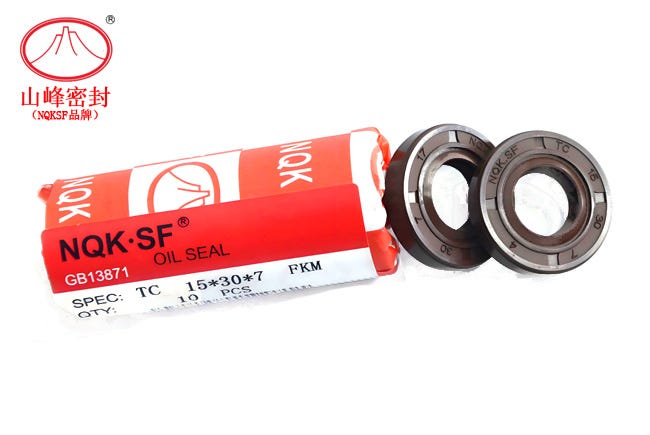
Choosing the Right Material
Different materials offer different performance characteristics:
NBR (Nitrile Rubber): Good wear and oil resistance. Suitable for general applications (–40 to 125°C).
HNBR (Hydrogenated Nitrile Rubber): Improved heat and aging resistance. Suitable for higher‑temperature environments (–50 to 150°C).
FKM (Fluorocarbon Rubber): Excellent resistance to chemicals, oil, and high temperatures. Suitable for corrosive or high‑temperature environments (–20 to 250°C).
Choosing the Seal Type
Match the seal structure to the working conditions:
TC: General‑purpose double‑lip.
TB: Dust‑intensive environments.
TA: High‑pressure hydraulic systems.
SC: Clean environments.
SB: High‑precision press‑fit applications.
TCV: Dusty or muddy outdoor conditions.
TCN: High‑speed, low‑friction applications.
Key Considerations During Selection
Operating environment: Evaluate temperature, pressure, medium, and contamination level.
Installation requirements: Ensure proper fit between the seal and shaft/housing to avoid leakage caused by incorrect installation.
Maintenance cost: Durable materials and appropriate structures reduce maintenance frequency and long‑term operating costs.
Selecting a skeleton oil seal requires a balanced consideration of dimensions, materials, and operating conditions.
Start by confirming the shaft and housing dimensions, then choose the appropriate material and structural type based on the application environment. Proper installation and maintenance are equally important for long‑term sealing performance.


Comments
Post a Comment