Why is It Important to Use High Quality Oil Seals?
Over the past few years, as factories upgraded their automation systems and increased output targets, the demands placed on sealing components have changed significantly. Today’s machines run faster, carry heavier loads, and operate in environments filled with fine dust, moisture, chemical vapors, or temperature fluctuations. Under these conditions, an ordinary oil seal seldom lasts as long as expected.
What Field Technicians Notice First
During on-site maintenance visits, one of the most common patterns is uneven shaft wear near the sealing position. When the shaft surface becomes scratched or slightly grooved, the lubricant film around the lip is no longer uniform. A low-grade oil seal tends to harden quickly under such conditions, and leakage soon follows.
High-performance oil seals behave differently. They maintain elasticity, absorb minor shaft imperfections, and keep lubricant in place while preventing external particles from entering. In long-running equipment — presses, engines, mixers, reducers — this difference becomes very noticeable.
Why Better Seals Reduce Downtime
Downtime in industrial facilities rarely happens at a convenient moment. When an oil seal fails, the consequences usually appear in stages:
Temperature rise near the bearing housing
Lubricant loss, leading to unstable rotational behavior
Vibration increase as friction grows
Sudden shutoff or a need for emergency maintenance
Replacing an oil seal is not complicated. Stopping an entire production line just to access that small component, however, can cause major disruption. Plants that operate with higher-grade seals report fewer interruptions because the sealing structure tolerates heat cycles, vibration, and pressure changes far better than standard models.
Material Choices Matter More Than Many Expect
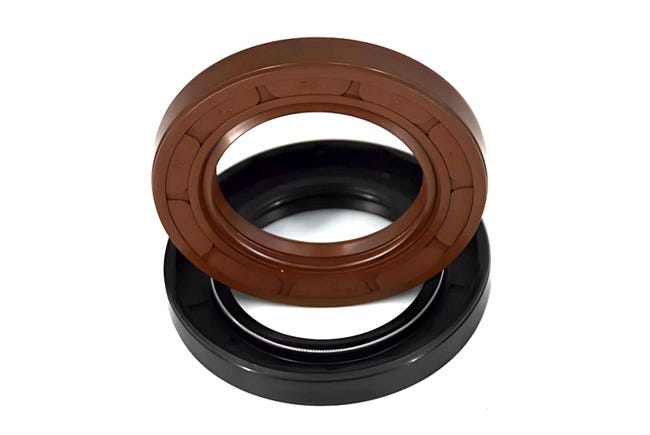
When people ask why two oil seals that look nearly identical can perform differently, the answer almost always lies in material formulation and the way the lip is shaped. FKM and advanced NBR blends are often selected for equipment exposed to hot oils or fluctuating temperatures. Machines that run in food-processing workshops might require PTFE-based seals because of cleaning chemicals and steam cycles.
In my daily work with clients from mining, marine, and manufacturing sectors, the improvement gained simply by switching to a more suitable material has been substantial. In some cases, bearing replacement intervals were extended by several months just because the oil seal was better aligned with the operating conditions.
Practical Notes for Distributors and Plant Managers
Those responsible for procurement often compare oil seals by appearance alone. This is understandable — they are small and standardized. However, a few practical checks make decision-making far easier:
Confirm shaft speed and temperature range rather than relying on catalogue guesses
Inspect the medium (type of oil, presence of fine particles, or moisture)
Review past failure records, if available
Consider whether the machine frequently starts and stops, which accelerates lip fatigue
These observations help prevent mismatch issues, which are the leading cause of early seal failure.
Where NQKSF Provides Long-Term Value
Working with many factories over the years, one feedback I hear repeatedly is the need for a supplier who not only delivers parts but also understands how these parts behave inside real equipment. NQKSF has spent decades refining both standard and customized oil seals, and what stands out is the consistency — products from different batches maintain the same performance, making long-term maintenance planning easier for clients.
Because the company keeps a broad range of models ready for shipment, urgent replacements can be arranged quickly. This matters in industries where unexpected downtime translates directly into lost output. The engineering team also works closely with customers to analyze sealing failures and recommend solutions, which helps reduce maintenance cycles and stabilize machine operation.
In industrial environments, reliability is built on the performance of countless small components working together. Among them, oil seals rarely attract attention, yet they protect some of the most critical moving parts in a machine. When chosen appropriately and manufactured with care, they extend equipment life, improve operational stability, and reduce unplanned downtime.


Comments
Post a Comment