What Oil Seal Provides the Best Sealing Performance for Rotating Shafts?
Selecting an oil seal for a rotating shaft is never a one‑size‑fits‑all decision. Working conditions vary widely, and factors such as speed, temperature, lubrication, and even shaft oscillation all influence the performance of the seal. Still, engineering experience provides some reliable guidelines.
Standard Continuous Rotation
For equipment such as motors, gear reducers, and pumps — where the shaft rotates continuously in one direction — rubber oil seals with a metal case are the most common choice. Nitrile rubber is widely used because it is cost‑effective and offers good oil resistance. When temperatures or surface speeds increase, fluorocarbon rubber becomes a more stable option due to its superior heat resistance and aging performance.
High‑Speed Rotation
In high‑speed applications, such as high‑speed motors or machine tool spindles, conventional rubber oil seals often cannot withstand the friction heat generated during operation. The sealing lip may burn or wear prematurely. In these cases, low‑friction fluorocarbon seals or polytetrafluoroethylene (PTFE) seals are typically used. PTFE offers extremely low friction, excellent temperature resistance, and the ability to tolerate short periods of dry running, though it is more expensive.
Small‑Angle Oscillation
Some shafts do not rotate continuously but instead oscillate within a small angle, such as ±10 or ±20 degrees. Standard oil seals tend to fail quickly in these conditions because the lip repeatedly bends at the same point, leading to fatigue cracks. For such applications, dedicated oscillating seals are used, featuring different materials and lip designs to improve fatigue resistance.
Large‑Angle Reciprocating Motion
When the oscillation angle becomes much larger — such as the ±180‑degree motion found in industrial robot joints — traditional oil seals are no longer suitable. These applications typically require PTFE seals with spring‑energized lips, which provide low friction, high wear resistance, and long service life. This design is widely adopted in robotic joint sealing.
Contaminated or Harsh Environments
In environments with mud, water, or heavy dust — such as construction or agricultural machinery — dust protection becomes critical. Standard oil‑seal dust lips are often insufficient. Cassette oil seals, which have a more complex structure and longer sealing path, are commonly used to improve contamination resistance and extend service life.
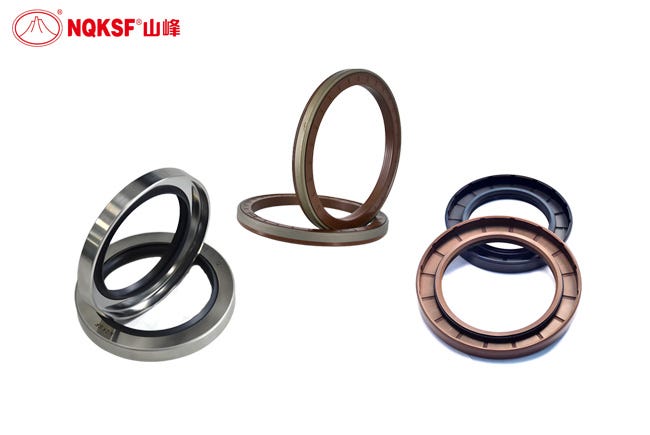
Oil‑seal selection should be based on working conditions rather than relying on a single model. By identifying key parameters such as speed, temperature, lubrication method, and oscillation angle, you can accurately determine the appropriate sealing type and achieve reliable.


Comments
Post a Comment