What Precautions Should Be Taken During Oil Seal Installation?
Many people think an oil seal is just a small component that only needs to be pressed into place. In reality, the quality of the installation directly affects sealing performance and equipment life. I have seen many cases in factories where improper installation caused oil leakage, bearing failure, and unnecessary downtime. The following practical tips may help you avoid these issues.
Before Installation: Check Three Key Items
Inspect the oil seal carefully. Make sure the sealing lip is not deformed, the spring is intact, and the model matches your application. Do not wait until after installation to discover it is the wrong size.
The shaft must be smooth and free of burrs. A small chamfer of 15 to 30 degrees helps prevent the sealing lip from being scratched during installation. The housing bore should also be clean and free of damage.
Clean all contact surfaces thoroughly. Remove dust, metal particles, and old oil residue.
Do Not Forget Lubrication
Always apply lubricant to the sealing lip. Without lubrication, the seal will run dry at startup and fail quickly.
Should you lubricate the outer surface
Metal outer case: generally no, to prevent slipping
Rubber outer case: a thin layer of oil can help with installation
Centering and Even Force Are Critical
The oil seal must be pressed in straight. A tilted installation will cause poor sealing and uneven wear.
Use proper installation tools or a guide sleeve. Avoid hammering the seal directly, especially on the lip side.
Once seated, check that the seal is flat and fully aligned with no lifted edges.
Perform a Final Check
Rotate the shaft by hand to ensure there is no abnormal friction or binding.
If possible, run the equipment briefly to check for early signs of leakage.
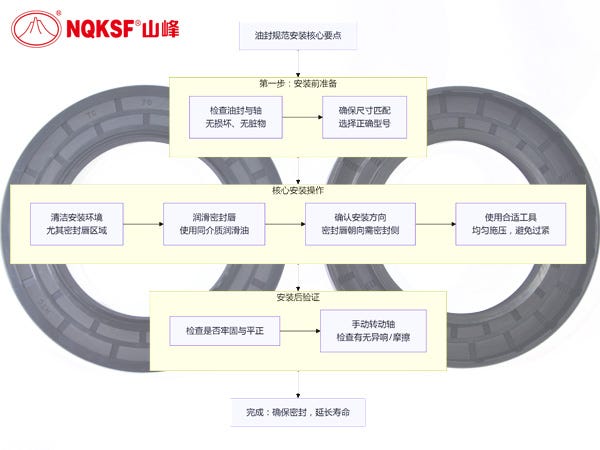
Small details often determine whether an oil seal performs reliably. Cleanliness, lubrication, correct orientation, and proper alignment are essential for a successful installation. For factory environments or batch assembly, establishing a standard procedure or checklist is highly recommended, especially for training new technicians.


Comments
Post a Comment